
Home › Damp identification
Topic
Damp identification
How to work out whether a wet wall is condensation, water getting in from outside, a leak, or the rare case of rising damp. What you can check safely yourself, and when an independent survey is worth the money.
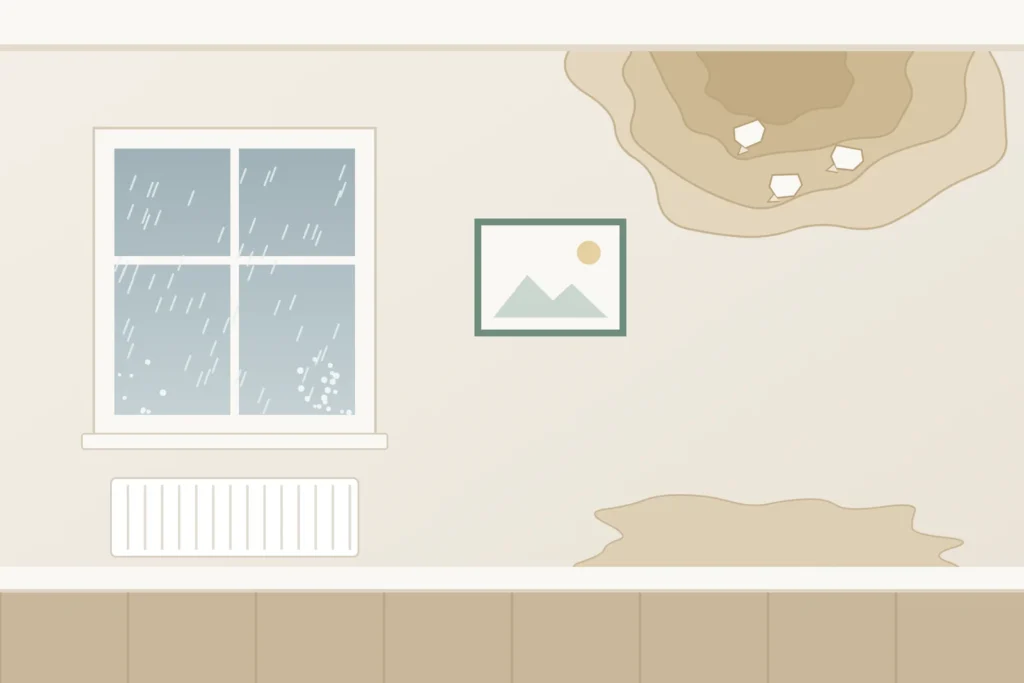
Start here
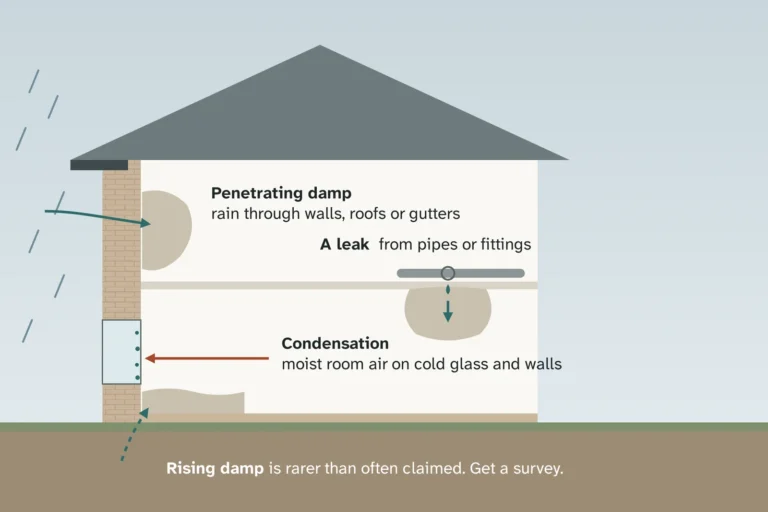
“Damp” is not a diagnosis. GOV.UK guidance sorts it into four routes: condensation, penetrating damp (rain getting in through a defect), rising damp (ground water drawn up a wall) and traumatic damp, meaning leaks from pipes, baths and tanks. Each has a different fix, and the expensive mistake is treating one as another: a dehumidifier under a leaking gutter, or a chemical damp-proof course injected into a wall that only needed the path outside lowering.
The single most useful thing you can do is notice when it is worse. Worse in cold weather and mornings points to condensation. Worse during and after rain points outside. Constant whatever the weather points to a leak. RICS, the surveyors’ body, warns that rising damp “is often misdiagnosed” and that failure of an original damp-proof course “is extremely rare”, so it is the last explanation to reach for, not the first. Nothing in these guides is a diagnosis; they tell you what to look for, what to photograph and who to call.
Which guide do you need?
| What you are seeing | Points to | Read |
|---|---|---|
| Not sure. Wet, stained or mouldy wall and you want to narrow it down | Any of the four | Damp or condensation? How to tell which you have |
| A defined patch on an outside wall or ceiling that grows after rain | Penetrating damp | Penetrating damp: how to spot it and where the water gets in |
| Tide mark and white salts low on a ground-floor wall; someone has said “rising damp” | Usually a bridged DPC, raised ground or a leak; rarely true rising damp | Rising damp: signs, look-alikes and what it usually turns out to be |
| A damp patch, ring or stain on a ceiling | Plumbing above, the roof, or loft condensation | Damp patch on the ceiling: what caused it? |
| Speckled black mould on cold corners, windows misting, worst in winter | Condensation | Condensation and humidity hub |
| A firm has quoted for DPC injection, tanking or specialist plaster | Get an independent view first | What a proper survey looks like |
Guides
Diagnosis
Damp or condensation?
The four moisture routes compared, a safe seven-step self-check, why damp meters mislead, and what a JPS 2022 survey is.
Sources: RICS, Energy Saving Trust, CSE, Historic England
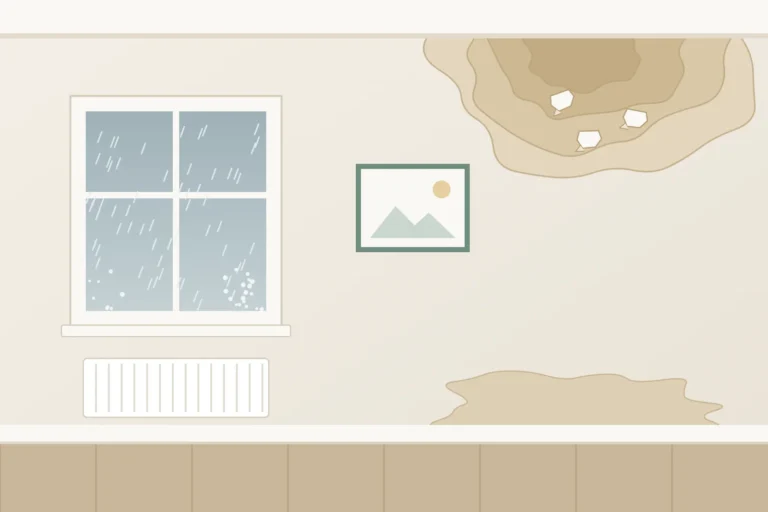
Penetrating damp
Penetrating damp: how to spot it
The usual UK entry points from roof to ground level, a look-from-the-ground checklist, and who fixes what.
Sources: Manchester City Council, Property Care Association, Energy Saving Trust
Rising damp
Rising damp: signs and look-alikes
The textbook signs, the six things mistaken for it, and why a free survey from a damp-proofing firm is not a diagnosis.
Sources: RICS, Historic England, Pennington Choices
Ceilings
Damp patch on the ceiling
Room above, roof or loft condensation: how to tell, what not to touch, and who to call for each.
Sources: Energy Saving Trust, GOV.UK, HSE
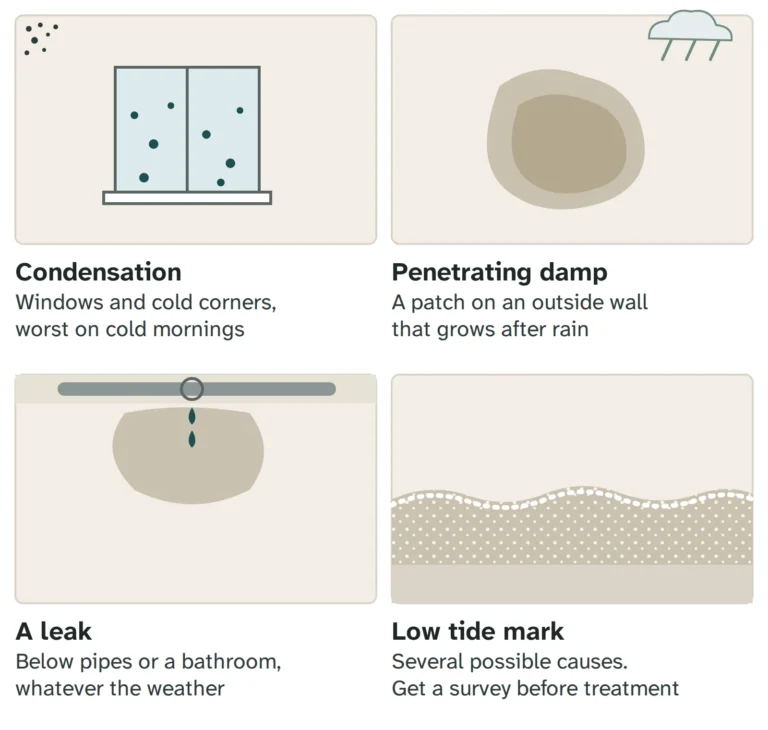
The four routes at a glance
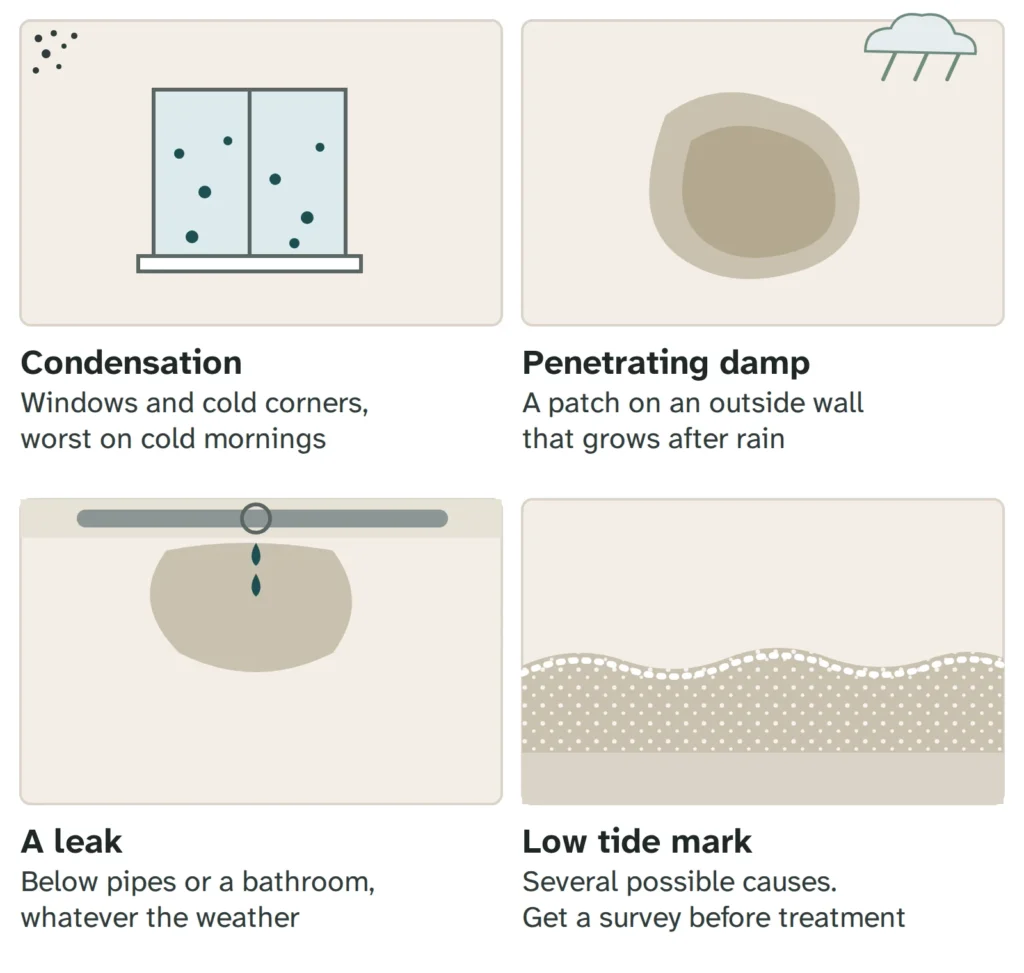
| Route | Tell-tale | Timing | Who deals with it |
|---|---|---|---|
| Condensation | Cold surfaces, corners, behind furniture; speckled mould; no tide mark | Cold weather, mornings | You, with the condensation guides; landlord for the building side |
| Penetrating damp | Defined patch lined up with a gutter, crack, sill or roof fault | During and after rain | Roofer, builder, or an independent surveyor if unclear |
| Leak (traumatic damp) | Patch under or beside a bath, shower, pipe run, tank or flat roof | Constant, or each time the fitting is used | Plumber; electrician if water reaches fittings |
| Rising damp | Horizontal tide mark and salts low on a ground-floor wall | Fairly steady, worse in wet seasons | Independent JPS 2022 survey before any injection or tanking |
What you can and cannot check yourself
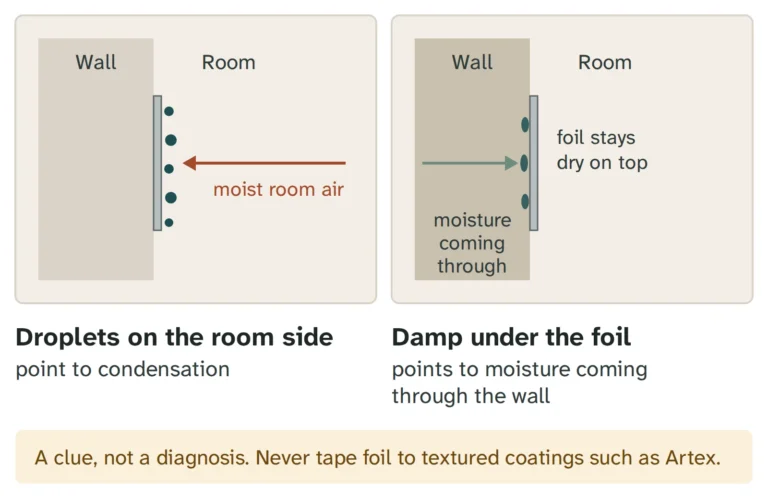
You can: keep a two-week diary of weather against what the wall looks like, photograph everything with dates, walk round outside after rain and look from the ground at gutters, downpipes, pointing, render, sills and ground levels against the damp-proof course, tape a foil square to a dry wall as a rough indicator, and take a humidity reading. You cannot: diagnose from a damp meter (RICS: it measures electrical conductivity, and salts and foil-backed board read high when dry), go up a ladder or onto a roof, or tell true rising damp from a bridged DPC without opening things up. Get quotes from three TrustMark-certified professionals for structural work (Energy Saving Trust), and for a diagnosis ask for a JPS 2022-compliant inspection from someone with nothing to sell.
Safety
Water near a light fitting: turn off the lighting circuit at the consumer unit and call an electrician. Do not sand, scrape or drill textured coatings in a home built or refurbished before 2000; they may contain asbestos (HSE). Do not press on a sagging, bulging ceiling.
If you rent
Describe what you see and when it is worse; you do not have to name the cause. Social landlords must investigate within 10 working days and make significant damp and mould hazards safe within 5 working days (Awaab’s Law, from 27 October 2025). Private tenants can ask the council’s environmental health team to inspect. Shelter and Citizens Advice cover the legal side; these guides do not.
Coming next in this topic
Guides in preparation: damp meter readings explained, damp in a bedroom, and what a damp survey report actually says. Added as sources are checked; no fixed dates.