
UK home moisture guides
Find what’s causing the damp. Then put the surface right.
Plain-English guides to condensation, damp and mould in UK homes, with the official guidance behind every step and clear signs for when to call a professional.
Find the cause
Condensation, damp or a leak? Start with the signs you can see.
Fix the affected surface
Deal with a small patch of mould safely, and know when not to.
How the guides fit together
Understand it, identify it, then treat it
Most moisture problems are easier to fix once you know where the water comes from. Each topic starts with one guide.
1Understand
Condensation and humidity
Why water appears on windows and cold walls, and how daily habits and ventilation change it.
Start hereCondensation on windows
2Identify
Damp identification
Tell condensation apart from penetrating or rising damp before you spend money on treatment.
Start hereDamp or condensation?
3Treat
Surface mould
Clean very small areas safely, and deal with the moisture so it does not come back.
Start hereRemove mould from walls
Free tool
Dew point calculator
Enter your room temperature and relative humidity to see the temperature at which a surface starts to collect condensation. Add a surface reading to see how close it is.
13.2 °C
Example values. Surfaces colder than this will gather condensation.Guides
Start with the problem you can see
Every guide answers its main question first, then covers causes, look-alikes, the steps you can take, the limits of doing it yourself and who to call. Each one lists the UK sources it is built on.
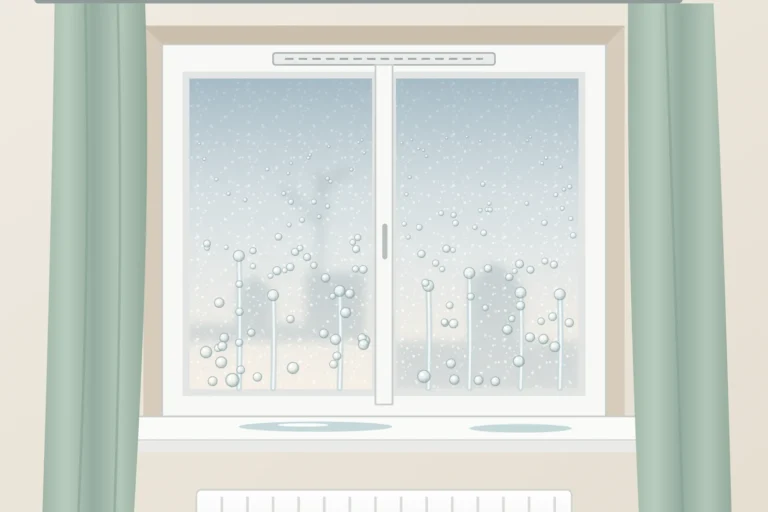
Condensation
Condensation on windows
Inside, outside or between the panes: what each means, how much is normal, and the fixes in order.
Sources: Energy Saving Trust, FENSA
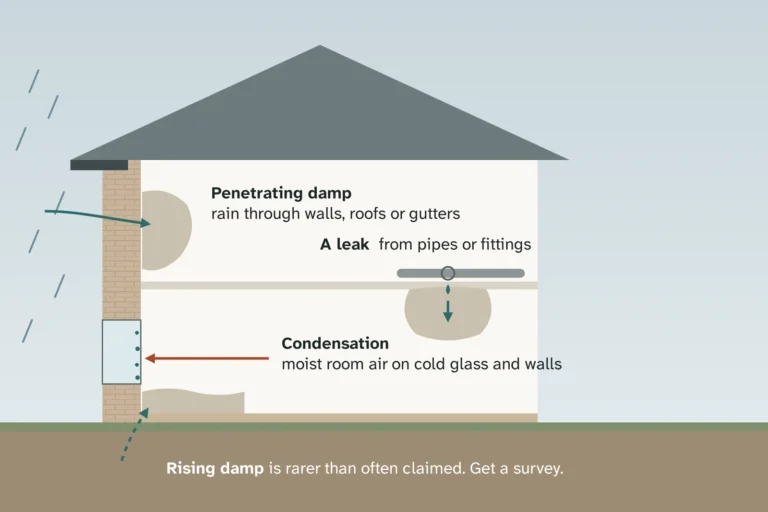
Diagnosis
Damp or condensation?
The four moisture routes compared, a safe self-check, and why damp meters and free surveys mislead.
Sources: RICS, Energy Saving Trust
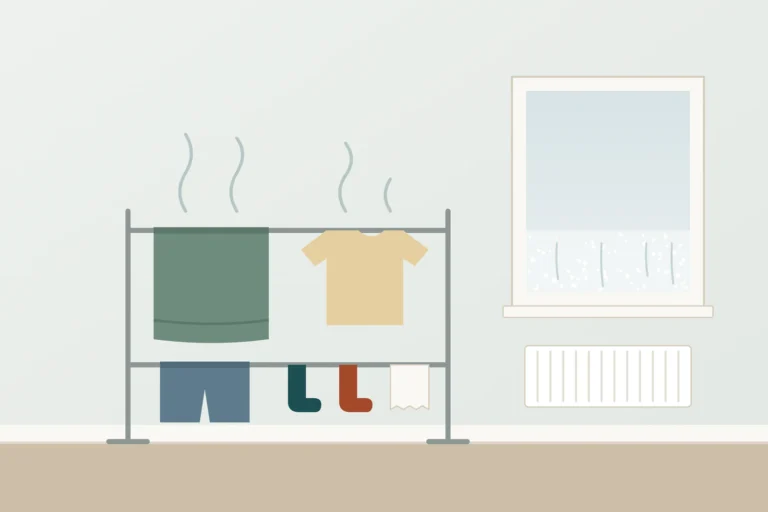
Humidity
Reduce humidity in your house
Measure, cut moisture at source, ventilate, heat steadily; dehumidifiers last.
Sources: Energy Saving Trust, Approved Document F
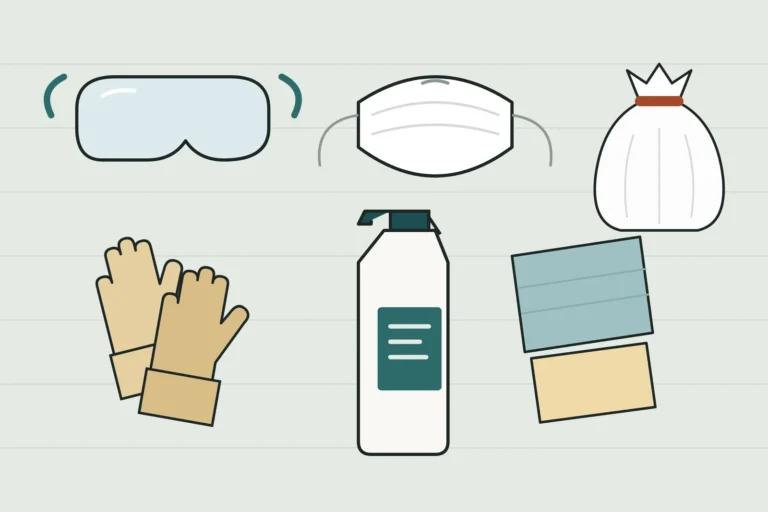
Mould
Remove mould from walls
When it is safe to do yourself, the kit, the method and the surface-by-surface table.
Sources: GOV.UK, Oxford City Council
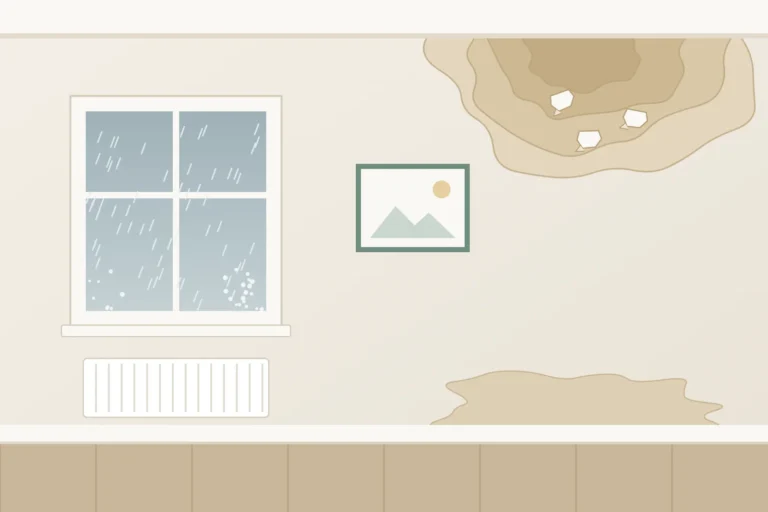
Damp
Penetrating damp
Where rain gets in, a look-from-the-ground checklist, and who fixes what.
Sources: Manchester City Council, PCA
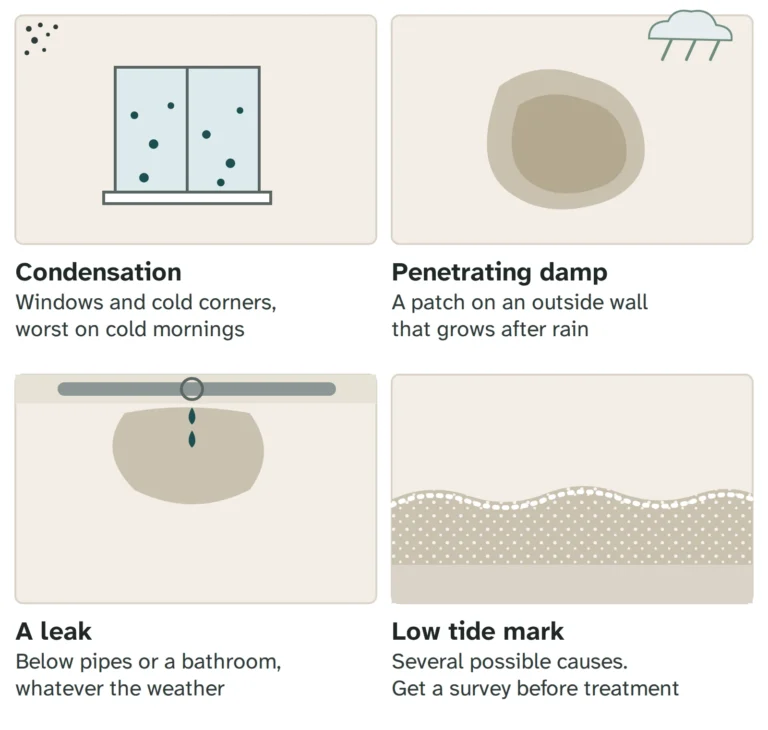
Damp
Rising damp: signs and look-alikes
Why it is so often the wrong answer, and what to check before anyone injects anything.
Sources: RICS, Historic England
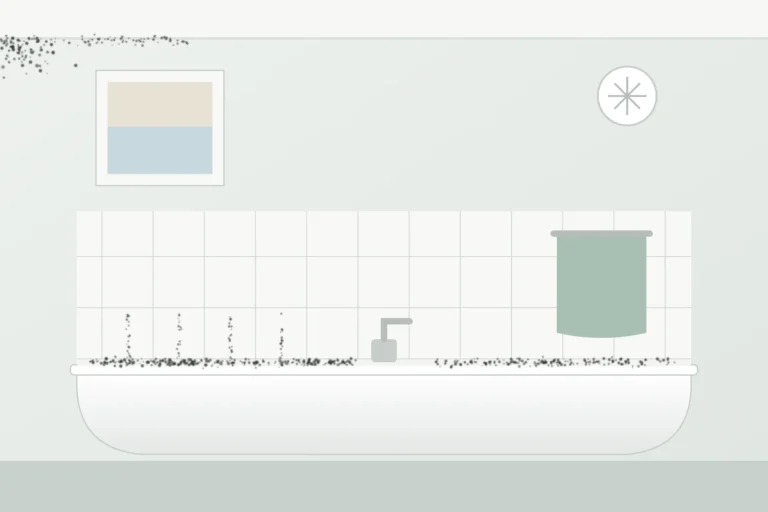
Mould
Mould on the ceiling
Why the ceiling, cleaning safely above head height, and fans and insulation that stop it.
Sources: GOV.UK, Approved Document F
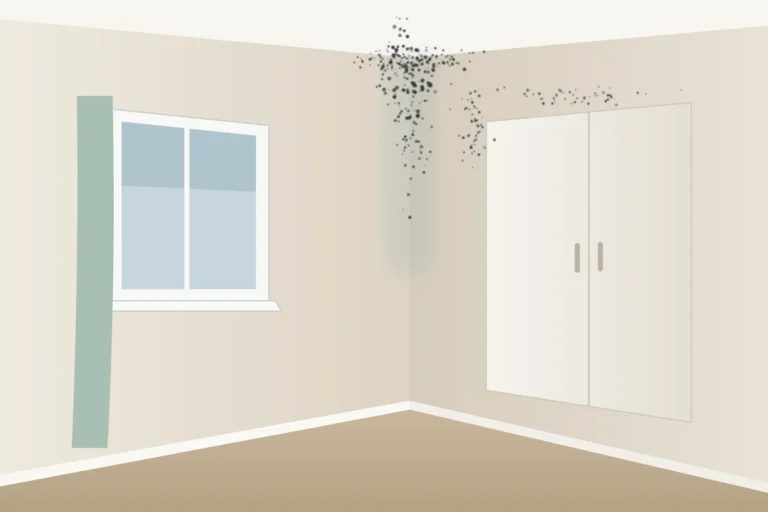
Mould
Mould in the bedroom
Overnight moisture, cold corners and wardrobes, and the routine that works.
Sources: GOV.UK, Energy Saving Trust
All condensation and humidity guides · All damp identification guides · All mould guides
More topics: Ventilation · Dehumidifiers and drying laundry · Paint and moisture-damaged surfaces · Silicone and grout · Musty smells
Quick answers
Six questions people ask first
Is condensation on my windows normal?
Light misting on cold mornings that clears is normal in a British winter. Water running down the glass, wet sills and black spots on the frames mean there is more moisture in the air than the house can get rid of. Misting between the panes is a failed sealed unit, which is a glazing job, not a moisture one. Condensation on windows covers all three.
Is 65 or 70 per cent humidity too high?
It depends on how cold the surfaces are. Room air at 20 C and 65 per cent has a dew point of about 13 C, so any wall or window colder than that will be wet. Building standards use about 80 per cent humidity at the surface as the mould-risk line, and a cold outside wall reaches that while the room reads much lower. What humidity should a house be? has the table; the dew point calculator does the sum for your numbers.
Does bleach kill mould?
On tiles and glass it can, and it lightens the stain. On painted plaster and other porous surfaces it tends to whiten the mark while growth in the surface survives, and GOV.UK prefers a purpose-made mould product for health and safety reasons. Never mix bleach with vinegar or any other cleaner. Bleach, vinegar and mould sprays compared.
Is it rising damp?
Probably not. RICS says rising damp is often misdiagnosed and that failure of an original damp-proof course is extremely rare. A tide mark low on a ground-floor wall usually turns out to be a raised path, a bridged damp-proof course, a leaking downpipe or condensation behind furniture. Rising damp: signs and look-alikes lists the checks to make before anyone quotes for injection.
Who do I call about a damp patch on the ceiling?
Work out the route first: a plumber for a bathroom or pipe above, a roofer for a patch that grows in rain, and nobody yet for loft condensation that appears on frosty mornings without rain, because that is a ventilation and insulation problem. If water is near a light fitting, turn the lighting circuit off and call an electrician. Damp patch on the ceiling has the cause-finding table.
I rent. What can I insist on?
Report it in writing with dated photographs. Social landlords must investigate a potential hazard within 10 working days and make significant damp and mould hazards safe within 5 working days under Awaab’s Law, from 27 October 2025, and GOV.UK tells landlords not to wait for medical evidence. Private tenants can ask the council’s environmental health team to inspect. Every guide has a renters section; Shelter and Citizens Advice cover the legal side.
Our editorial promise
Guidance you can check for yourself
Moisture problems attract expensive guesswork. We keep to what published guidance can support, and show you where each step comes from.
- Every step traced to a sourceWe link to GOV.UK, the Health and Safety Executive, Historic England and the Energy Saving Trust, so you can read the original.
- Images labelled for what they areDiagrams and illustrations are marked as illustrations. We only call an image a photo of a real problem when it is one.
- No diagnosis by gadgetA foil test, thermal image or moisture-meter reading is a clue, not a verdict. We say so wherever one appears.
- Clear lines for professional helpWe tell you when to stop and call a surveyor, a registered electrician or a Gas Safe engineer.