
Drying Clothes Indoors Without Causing Condensation and Mould
Drying washing indoors is the biggest avoidable source of moisture in most UK homes in winter. How to do it in one room, with the door shut, without the house paying for it.
Quick answer
A load of washing carries litres of water, and every drop of it ends up in the air of whichever room you dry it in. Drying indoors is not wrong, but drying on radiators in the living room or bedroom with the windows shut is the single biggest avoidable cause of winter condensation and mould in UK homes. The routine that works: dry outside whenever you can; otherwise dry in one room with the door shut and either a window open or a dehumidifier running; keep washing off radiators in rooms people sit and sleep in; and run the tumble dryer’s vent or condenser properly. A cheap hygrometer shows you what each choice does.
On this page
How much water is in a load of washing
Clothes come out of a modern washing machine damp rather than wet, but a full drum of cotton still holds a good deal of water; a couple of litres is a fair working figure for a mixed load, more for towels and bedding. All of it has to go somewhere as the clothes dry. Outdoors it blows away. Indoors it goes into the air of the room, and from there onto the coldest surfaces in the house: the windows, the outside-wall corners, the wall behind the wardrobe.
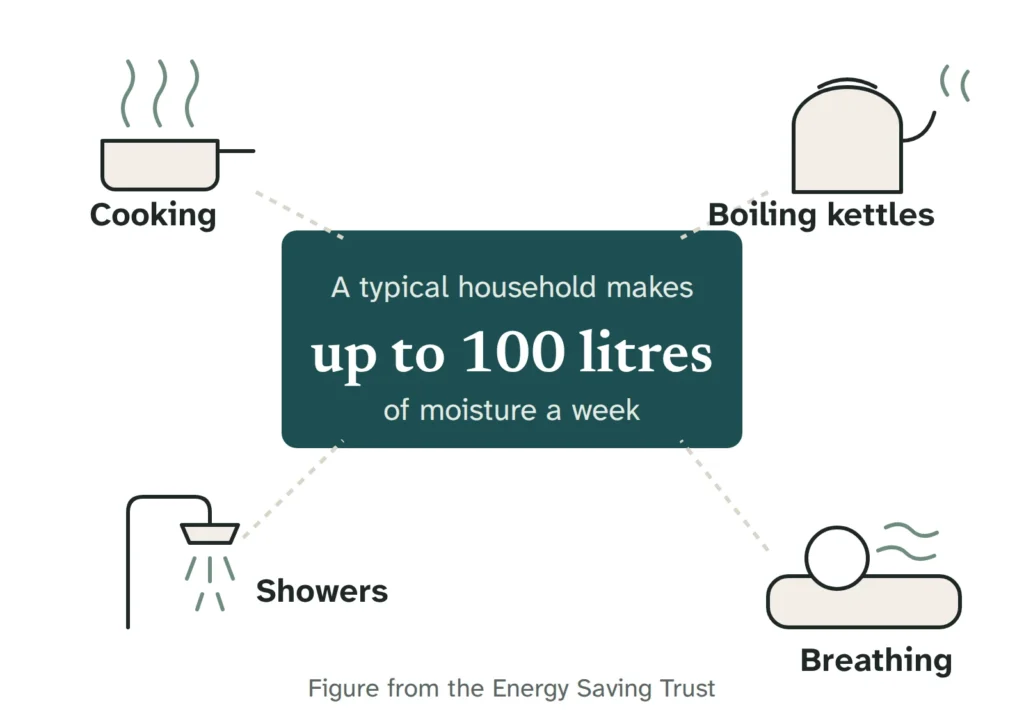
The Energy Saving Trust puts a household’s total moisture output at up to 100 litres a week from cooking, washing, bathing and breathing, and names drying clothes indoors as one of the things to avoid. Wealden District Council’s worked example of a day’s moisture in a home puts drying clothes indoors at the top of the list, well ahead of cooking or a bath.
If you want to see the effect rather than take it on trust, put a thermo-hygrometer in the room, note the reading, hang a load on an airer with the door and window shut, and read it again after two hours. The guide to what humidity a house should be explains what the numbers mean; a reading that climbs into the 70s and stays there is the start of a mouldy window frame.

Why radiators are the worst place
Hanging washing on a radiator feels efficient because the clothes dry fast. That is the problem: the water leaves the clothes quickly and goes straight into the warmest air in the house, which then drifts to the coldest surfaces and condenses. The radiator also heats the room less while it is covered, and in a bedroom the moisture is added exactly where two people will breathe out more all night.
Three other reasons to keep clothes off radiators in living rooms and bedrooms:
- The room is usually sealed. Nobody opens the living-room window in winter, so nothing removes the water.
- The wettest air collects behind furniture and curtains, which is where condensation mould starts. See condensation on walls and mould in the bedroom.
- The next load goes on before the walls have dried from the last.
A radiator in a bathroom with the extractor fan running and the door shut is a different case, covered below.
The options, compared
| Method | What happens to the water | Cost to run | Best for | Drawbacks |
|---|---|---|---|---|
| Outdoors (line or rotary airer) | Blown away | Nothing | Any dry day with a breeze; even cold, bright winter days work | Weather; time |
| Airer in one room, door shut, window open | Leaves through the window | Some lost heat from one room | Bathrooms and spare rooms; homes with no dehumidifier | Slow in cold, still weather; the room gets cold |
| Airer in one room, door shut, dehumidifier running | Collected in the dehumidifier tank | Electricity for the dehumidifier | Homes that dry indoors most days; flats with no outside space | Buying and emptying the unit; noise |
| Heated airer | Clothes dry faster; water still goes into the room | Electricity for the airer | Small loads where speed matters | Does nothing about the moisture; needs a window open or a dehumidifier as well |
| Vented tumble dryer | Blown outside through a hose | Electricity | Anyone with a hose to the outside | A hose that ends indoors dumps every drop into the room |
| Condenser or heat-pump tumble dryer | Collected in a tank or drained | Electricity (heat pump uses least) | Homes with no outside vent | Empty the tank; keep filters clean or efficiency drops |
| Radiator in a living room or bedroom | Into the room’s air, then onto the coldest walls | Heat lost while the radiator is covered | Nothing | The cause of most “mystery” winter condensation |
The routine that works
- Dry outside whenever the weather allows. A cold, dry, breezy day dries clothes; frost and fog do not. Bring the washing in before evening damp sets in.
- Choose one drying room and keep its door shut. The bathroom is usually the best choice: it has a fan, a hard floor, and nobody sleeps in it. A spare room or utility room works too. The point is to contain the moisture in one room and remove it from there.
- Remove the water from that room. Either open the window (a few centimetres is enough if the door is shut) or run a dehumidifier with the window shut, or run the bathroom extractor fan. Do not do none of these.
- Space the clothes out. Air has to move between them. A packed airer dries from the outside in and holds moisture in the middle for days.
- Spin faster. A higher spin speed on the washing machine leaves less water in the clothes, which is less water for the room.
- Air the rest of the house as normal. The Energy Saving Trust suggests opening windows several times a day for at least five minutes, and keeping trickle vents open. Wash day is not the day to skip it.
- Check the drying room the next morning. Wipe any condensation off the window and the sill so the frame does not stay wet. The mould on window frames guide explains why that matters.
Dehumidifier or open window?
Both work; they cost different things. An open window costs heat from one room and is slower in cold, still weather. A dehumidifier costs electricity and a purchase price, and it lets you keep the window shut, which matters in a flat on a main road or a home where the drying room is also a cold one.
A dehumidifier pulls water from the air into a tank. Set it to hold the room below about 60 per cent relative humidity and put it in the drying room with the door shut; a unit with a “laundry” setting runs at full output until the load is dry. In a cold room a desiccant model keeps working where a compressor model slows down. Empty the tank into the sink, not the bath with the window shut. Running cost is the fan and compressor’s wattage on the label multiplied by the hours it runs, at your own tariff; this site does not quote figures because tariffs change.
It is not a cure for a leak or a damp wall. If the room stays humid with no washing in it, read damp or condensation first.
Tumble dryers: the hose and the filter
A vented dryer must vent outside through a hose to a wall vent or a window kit. A hose that ends in the room, or in a garage or conservatory attached to the house, puts every drop the dryer removes into the air. Check that the hose is attached at both ends, not crushed, and that the outside flap opens. A condenser or heat-pump dryer collects the water in a tank instead; empty it after each cycle and keep the lint filter and the condenser clean, because a clogged filter makes the dryer run longer and hotter and dry worse. Do not vent a dryer into a loft.
Small loads, small rooms, flats
In a small flat with no outside space and one living room, the honest answer is that every indoor load adds moisture and the only question is how you remove it. A compact dehumidifier in the bathroom with the door shut, or an airer in the bathroom with the fan running and the door shut, is the workable version. Drying overnight in the bedroom you sleep in is the version that ends in mould behind the headboard.
If you rent
If you rent, report it in writing with dated photographs and keep a copy. Under Awaab’s Law, from 27 October 2025 social landlords must investigate a potential hazard within 10 working days, make significant damp and mould hazards safe within 5 working days of identifying them, complete emergency safety works within 24 hours and offer alternative accommodation if they cannot. Private renters are due to be covered under the Renters’ Rights Act at a later date; meanwhile the council’s environmental health team can inspect a private rented home. Shelter and Citizens Advice cover the legal side; this site does not give legal advice.
Drying washing is a tenant’s choice, and a landlord is entitled to expect the routine above. What a tenant is entitled to expect in return is a working extractor fan, windows that open and have trickle vents, and heating that can keep the flat at a reasonable temperature. GOV.UK guidance is blunt that it is “totally unreasonable to blame damp and mould in the home on ‘lifestyle choices’”; the household’s moisture and the building’s ability to clear it are both part of the picture.
Common mistakes
- Drying on radiators in the living room and bedroom with the windows shut.
- An airer in the hall or on the landing, where the moist air reaches every room.
- A heated airer used as if it removed moisture. It moves the water out of the clothes faster; something still has to move it out of the room.
- A vented dryer hose that ends behind the machine.
- Drying in a cold spare room with the door shut and no window open: the room gets damp and mouldy while the rest of the house stays dry.
Next step
Sources
- Fixing damp and condensation, Energy Saving Trust, updated 22 May 2026
- Controlling Condensation and Mould, Wealden District Council
- Understanding and addressing the health risks of damp and mould in the home, GOV.UK (DLUHC and UKHSA), updated 1 April 2026
- Condensation, damp and mould, Centre for Sustainable Energy, reviewed December 2025
- How Awaab’s Law changes the rules on hazards in social housing, Shelter, October 2025