
Home › Surface mould
Topic
Surface mould
How to clean a small patch of mould safely, when you should not do it yourself, what actually kills it, and how to stop it coming back by fixing the moisture that feeds it.
Start here
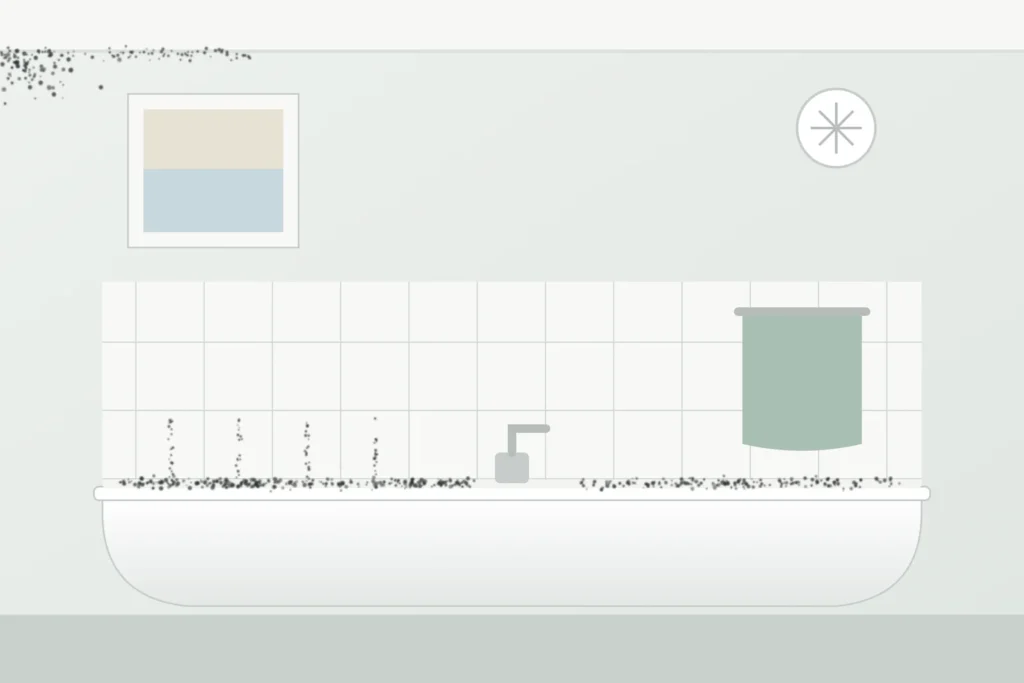
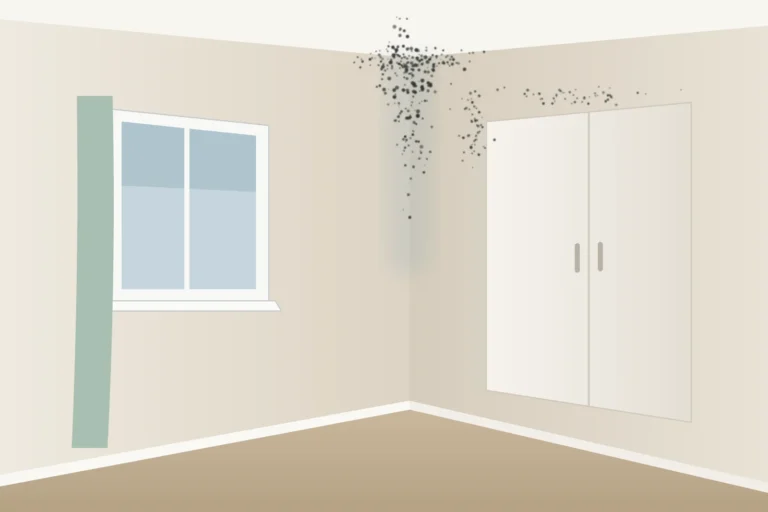
Mould on walls, ceilings and window frames in UK homes is almost always a condensation symptom: warm, moist air meeting a cold surface until the surface stays damp enough for spores to grow. Building standards use about 80 per cent humidity at the surface, sustained, as the risk threshold. That is why it appears in the same places every winter: behind wardrobes on outside walls, the top corners of bedrooms, bathroom ceilings and the bottom of window frames. Cleaning removes what you can see. Only fixing the moisture stops it returning; Oxford City Council puts it plainly: removing mould will not solve the problem if excess moisture remains.
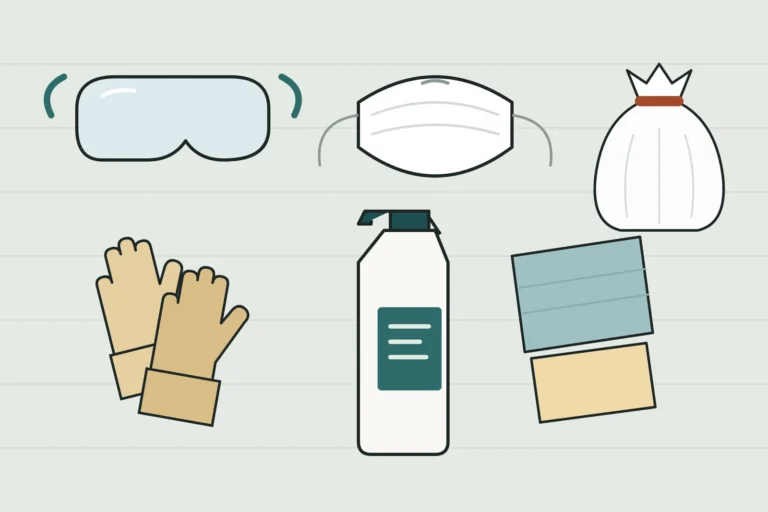
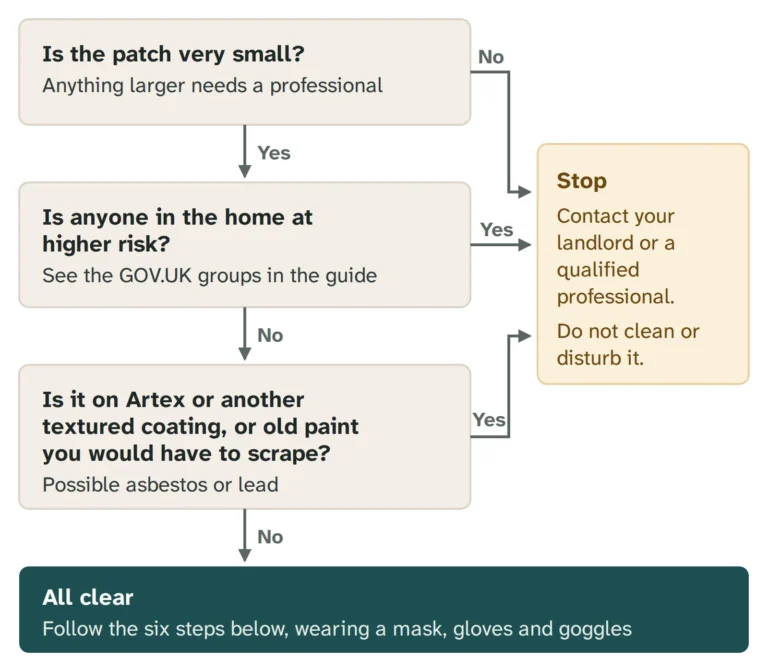
Two rules run through every guide here. First, small patches on hard surfaces are a reasonable job for most households, using a mould and mildew product as its label says, with gloves, mask and goggles, wiping when wet and binning the cloth; GOV.UK prefers these products to bleach for health and safety reasons. Second, larger areas, mould that keeps returning, soft plaster, textured ceilings in pre-2000 homes and any home where someone is in a higher-risk group (GOV.UK lists people with lung and heart conditions, weakened immune systems, pregnant women, children and older people among them) are for a professional and, if you rent, the landlord. Never mix cleaning products, and never use one after another on the same patch.
Which guide do you need?
| What you are seeing | Read |
|---|---|
| A patch of black or grey mould on a painted wall | How to remove mould from walls (and stop it coming back) |
| Mould on the bathroom or bedroom ceiling | Mould on the ceiling: bathroom and bedroom fixes |
| Black mould on window frames, seals, sills or the plaster around the window | Mould on window frames, sills and seals |
| Mould in a bedroom: corners, behind the wardrobe, on clothes | Mould in the bedroom: why it grows and how to stop it |
| You want to know whether bleach or vinegar works | Does bleach kill mould? Bleach, vinegar and mould sprays compared |
| You are not sure the cause is condensation | Damp or condensation? How to tell which you have |
| You want to stop it for good | How to reduce humidity in your house and condensation on walls |
| Black line along the bath or shower sealant | Black mould on silicone: clean it or replace it |
| A musty smell but no mould you can see | Musty smell in the house: find the source |
Guides
Cleaning
How to remove mould from walls
A before-you-start check, the safety kit, the method GOV.UK, EST and councils describe, and a surface-by-surface table.
Sources: GOV.UK, Energy Saving Trust, Oxford City Council
Ceilings
Mould on the ceiling
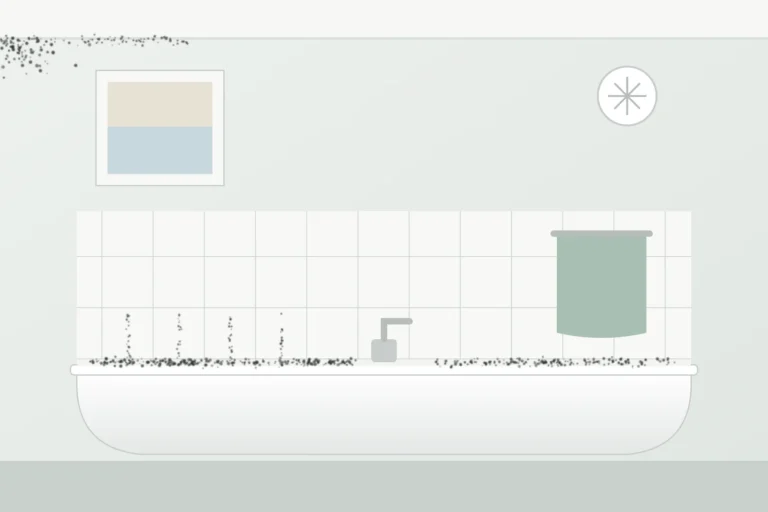
Why the ceiling, cleaning above head height safely, extractor fans that work, and the loft insulation link.
Sources: GOV.UK, Energy Saving Trust, Approved Document F, HSE
Windows
Mould on window frames, sills and seals
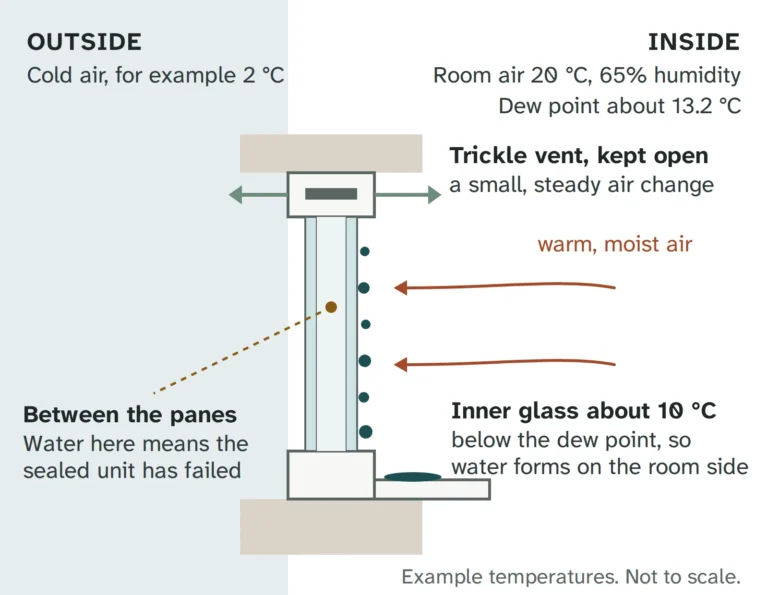
uPVC, timber and aluminium, gaskets and silicone, cold reveals, and the morning routine.
Sources: GOV.UK, Energy Saving Trust, UKHSA
Bedrooms
Mould in the bedroom
Overnight moisture, cold corners and wardrobes, the routine that works, and what renters can insist on.
Sources: GOV.UK, Energy Saving Trust, RICS
Products
Does bleach kill mould?
What bleach and vinegar do and do not do on each surface, the never-mix rule, and what UK guidance recommends instead.
Sources: GOV.UK, Oxford City Council, UKHSA
Diagnosis
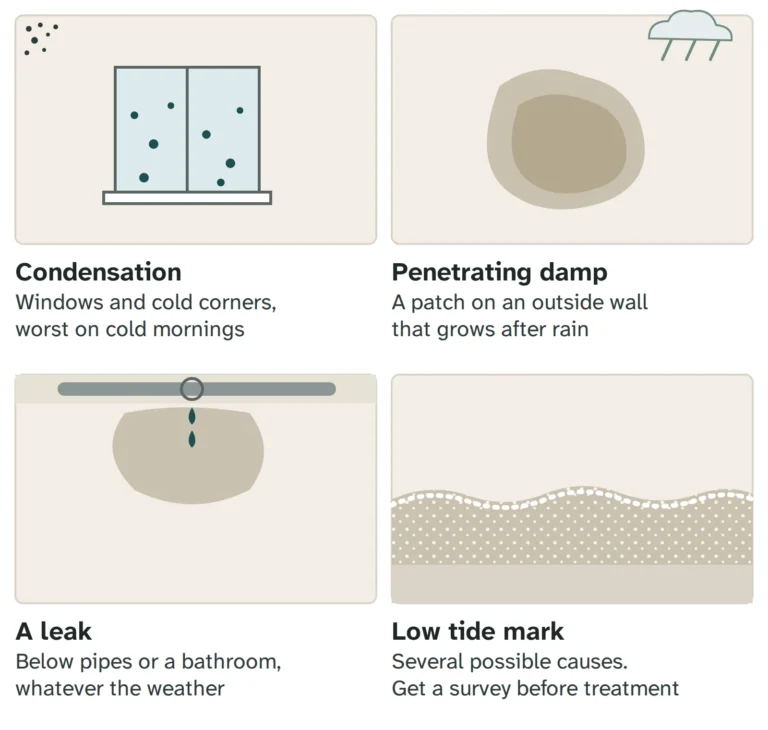
Damp or condensation?
Check it is condensation before you clean: timing, pattern, foil test and when to get a survey.
Sources: RICS, Energy Saving Trust
Before you clean anything
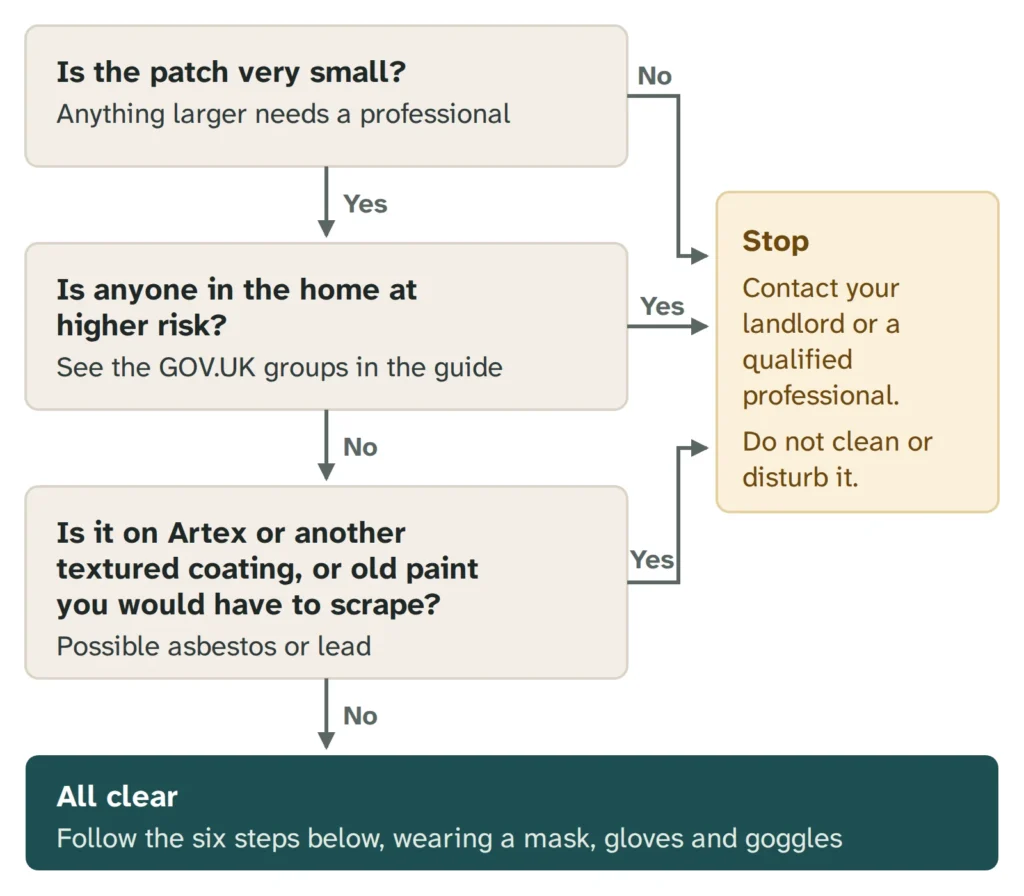
- Size. GOV.UK says tenants could reasonably be expected to remove condensation and very small amounts of mould; larger areas are for qualified professionals. Retailers commonly use “under one square metre” as a rule of thumb.
- Who is in the home. If anyone is in a higher-risk group, do not clean it yourself with them in the room, and report it rather than manage it.
- The surface. Hard painted plaster, tiles and uPVC clean well. Soft or crumbling plaster, wallpaper that lifts, bare timber and textured coatings in pre-2000 homes need a different route; HSE warns that textured coatings may contain asbestos and must not be sanded or scraped.
- The product. One purpose-made mould and mildew product, used as its label says. For large areas Oxford City Council points to a fungicidal wash with an HSE approval number. Do not brush or vacuum dry mould; it releases spores.
- Bleach. It can work on non-porous surfaces such as tiles and glass and it lightens stains, but GOV.UK prefers mould products for health and safety reasons, and on porous walls bleach tends to whiten the mark while growth in the surface survives.
Why it comes back
Mould returns because the surface is still cold and the air is still wet. The condensation hub covers the three levers: less moisture, more ventilation, steadier warmth. The two fixes that matter most in practice are running the bathroom extractor fan for at least 15 minutes after a shower (Energy Saving Trust) and leaving a gap between furniture and outside walls so air can move. Anti-mould paint is for after the cause is fixed, on a cleaned and dry surface; Oxford City Council says never to paint or paper over untreated mould.
Safety
Never mix bleach with vinegar, other acids or ammonia-based cleaners; the reaction releases toxic gas. Never use one product after another on the same patch. Ventilate the room and keep the doors to other rooms closed. Health questions are for your GP or NHS 111; these guides do not give health advice.
If you rent
Report mould in writing with dated photographs before you clean it. Social landlords must investigate within 10 working days and make significant damp and mould hazards safe within 5 working days under Awaab’s Law (from 27 October 2025), and GOV.UK tells landlords not to wait for medical evidence. Private tenants can ask the council’s environmental health team to inspect.
Coming next in this topic
Guides in preparation: mould in or behind a wardrobe, mould out of clothes and fabric, and mould in the bathroom (a room-by-room prevention plan). Added as sources are checked; no fixed dates. Black mould on silicone now has its own guide in the silicone and grout topic, and peeling paint over mould is covered under paint and moisture-damaged surfaces.
Next step
How to remove mould from walls
The safe method for a small patch, and the check that tells you when not to.