
Why Is Paint Peeling Off My Walls or Ceiling? Causes and How to Fix It
Peeling, flaking and bubbling paint nearly always means moisture behind the film or poor preparation under it. How to read the pattern, what to fix first, and the safety checks before you sand anything.
Quick answer
Paint peels for one of two reasons: water got behind the film, or the film never had a proper grip on the surface. Moisture is the usual cause in bathrooms, kitchens, ceilings under bathrooms and outside-wall corners; poor preparation (painting over dust, grease, old gloss, powdery plaster or new plaster with no mist coat) is the usual cause everywhere else. Find and fix the moisture first, or the new paint peels too. Then remove all loose paint back to a firm edge, fill, prime and repaint. Two checks first: do not sand or scrape paint applied before 1992 without ruling out lead, and do not disturb textured coatings in a home built or refurbished before 2000, which may contain asbestos.
On this page
Read the pattern first
Where the paint is failing and how it looks tells you most of what you need to know.
| What you see | Most likely cause | What to do first |
|---|---|---|
| Peeling in a bathroom or kitchen ceiling, above a shower, or in a corner | Condensation on a cold surface, held there long enough to soak the paint film | Fix the ventilation and the cold surface; see mould on a bathroom ceiling and bathroom extractor fans |
| Bubbles or blisters that appear after rain, on an outside wall or a ceiling under a roof | Water coming through from outside (penetrating damp) or a leak | Find the entry point; see penetrating damp and damp patch on a ceiling |
| Flaking low on a ground-floor wall, sometimes with a white crust | Salts and moisture in the plaster, from a bridged damp-proof course, a leak or old damp | Check the outside ground level and pipes; see rising damp signs |
| Peeling in sheets from a smooth, shiny surface | Emulsion or water-based paint applied over old gloss or a silk finish without keying | Preparation problem: sand or key the surface and prime |
| Paint lifting with a dusty, powdery layer underneath | Painted over powdery, chalky or unsealed plaster, or over dust | Preparation problem: seal or mist-coat before repainting |
| Paint peeling from new plaster within weeks | No mist coat; the plaster sucked the water out of the first coat before it could bond | Preparation problem: strip back, mist coat, repaint |
| Cracking and flaking on old, thick, many-layered paint | Age; layers have lost flexibility, often on woodwork | Remove loose paint, but check for lead first if the layers may pre-date 1992 |
Dulux’s own fault-finding guidance lists the same two families of cause: “moisture trapped beneath the surface of the paint film”, and paint applied over powdery surfaces or contamination such as dirt, oil and grease.
Moisture behind the film
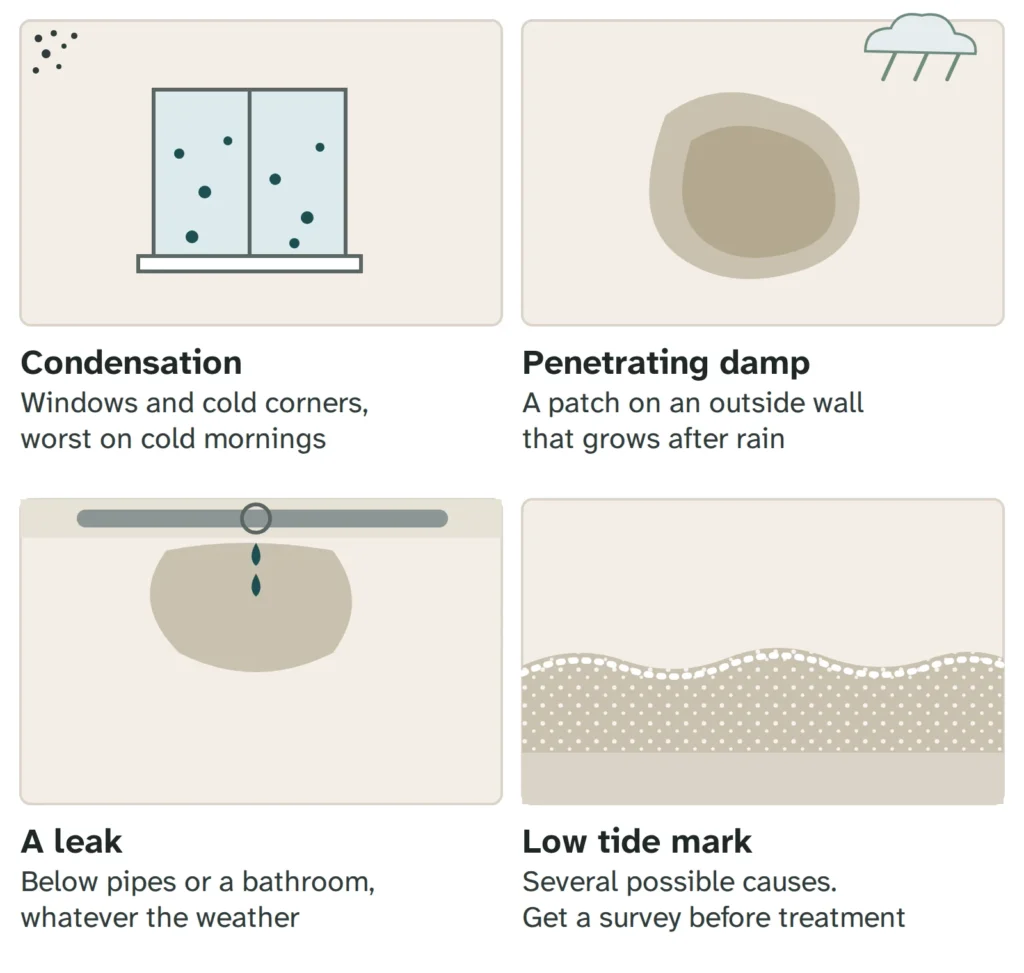
Emulsion paint on a wall is a thin film. If the wall behind it is wet, or the surface stays wet for hours each day, water works between the film and the plaster and the bond fails. It shows as blisters (water or vapour pushing the film out), peeling in patches that follow the damp area, and sometimes mould spots on or under the paint.
Three sources, in order of how common they are indoors:
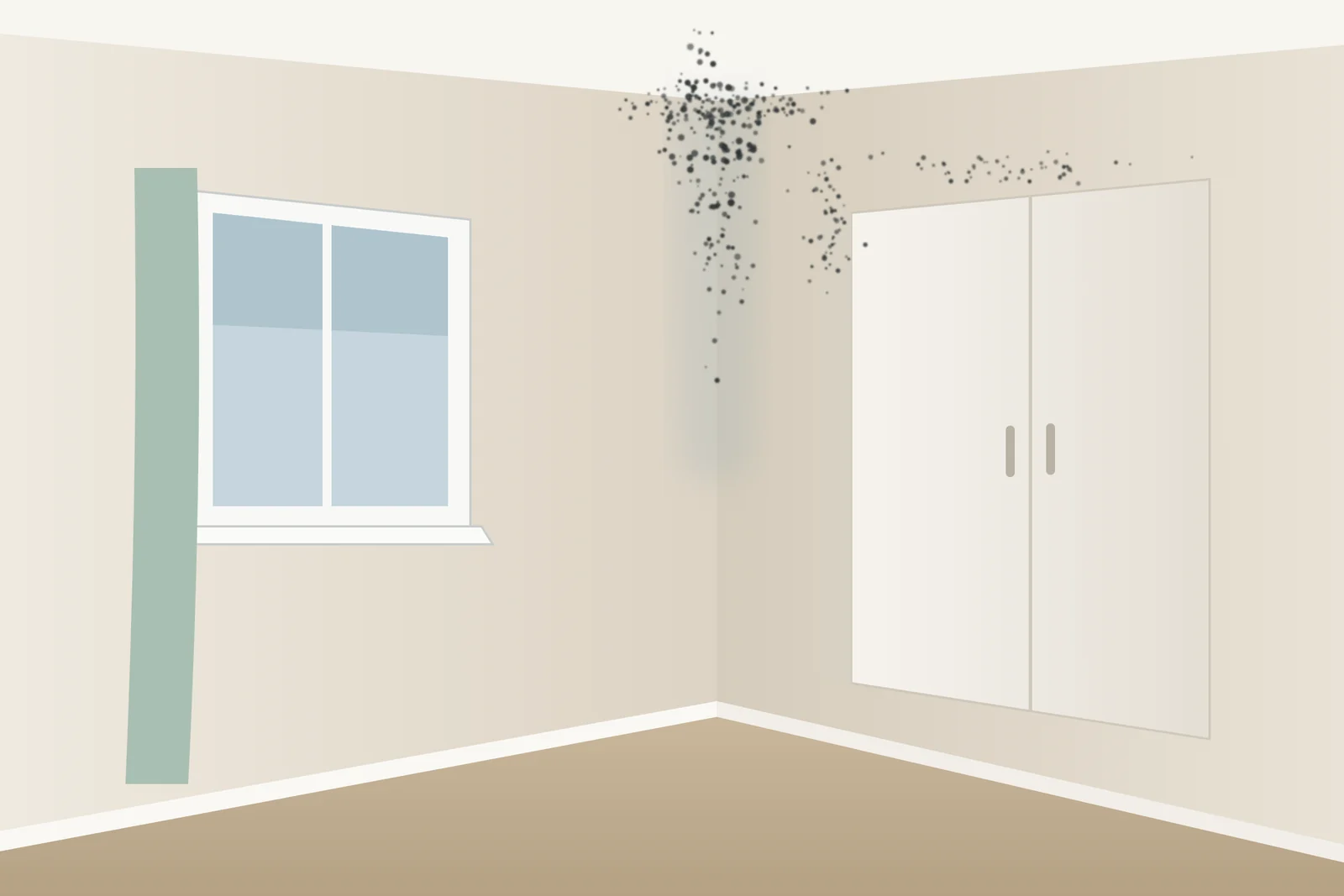
- Condensation. Warm, moist air meeting a cold surface. The tell-tale is location: ceilings and top corners of bathrooms, the wall above the cooker, outside-wall corners, window reveals and the wall behind furniture, worst in winter. Building standards use about 80 per cent humidity at the surface, held for long periods, as the mould-risk line, and a surface that condenses every night is well past it. The fixes are ventilation, steady heat and warmer surfaces, covered in reducing humidity and condensation on walls.
- Water from outside. A defined patch that grows after rain, often with a brown or yellow stain, on an external wall or a ceiling under a roof or a bathroom. The paint is the symptom; the gutter, flashing, sill or pipe is the cause.
- Moisture in new or drying plaster. Fresh plaster and plaster that has recently dried out after a leak both release water for weeks. Paint it too soon, or with a non-breathable paint, and it lifts.
Whatever the source, the order is the same: stop the water, let the surface dry fully, then repaint. Paint applied to a wall that is still damp, or to a bathroom ceiling that still condenses, will peel again, and “damp seal” paints on the inside of a wall that is wet from outside trap the water in the wall. Historic England’s guidance for older solid-walled buildings is that moisture routes must be found and that finishes should stay breathable.
Poor preparation under the film
If the wall is dry and the paint still peels, the paint never bonded. The usual reasons:
- Painting over gloss, eggshell or silk without keying. Water-based paints do not grip a shiny surface. It needs a light sand and, on old gloss, a suitable primer or adhesion primer.
- Powdery or chalky plaster. Old distemper, limewash and some cheap emulsions leave a powder that comes off on your hand. Paint on powder sticks to the powder, not the wall. A stabilising or sealing primer, or a mist coat on bare plaster, is the fix.
- Dust, grease and nicotine. Kitchen walls and ceilings carry a film of grease; anywhere carries dust after sanding. Wash with sugar soap and rinse before painting.
- New plaster without a mist coat. Fresh plaster is thirsty. A first coat of emulsion thinned with water (a mist coat) soaks in and gives later coats something to hold; a full-strength first coat sits on top and peels. Follow the paint manufacturer’s dilution.
- Painting too soon after filling or plastering, or in a cold, damp room where the coat cannot cure.
Two checks before you sand or scrape
Both apply to older homes, and both are about what you would breathe.
Lead paint
UKHSA notes that the sale of lead paint was banned in the UK from 1992, so paint applied before then, particularly older gloss on woodwork, doors, windows and radiators, may contain lead. Dry sanding or burning it off releases lead dust and fumes. If the layers may pre-date 1992, do not dry-sand: use a lead test kit or have it tested, and if lead is present use wet methods, a suitable mask and the precautions the test kit or a professional decorator advises, keeping children and pregnant women away from the work.
Textured coatings and asbestos
HSE warns that buildings built or refurbished before 2000 may contain asbestos, including in textured coatings such as Artex. Do not sand, scrape, drill or steam a textured ceiling or wall coating of that age. Peeling paint on a textured ceiling is a job for an asbestos survey before anything else.
How to fix peeling paint, in order
- Fix the cause. Moisture: stop the water and let the surface dry until it matches the rest of the wall to the touch and a hygrometer in the room reads normally for days. Preparation: identify what the paint was applied over.
- Remove everything loose. Take the flaking paint back to a firm edge with a scraper, gently; do not gouge the plaster. Dulux’s advice is that all loose material must be removed back to a firm edge before recoating. Bag the flakes.
- Feather the edges. Lightly sand the edge where sound paint meets bare surface so the step does not show through the new coat. This is the sanding that the lead and asbestos checks above apply to.
- Deal with any mould. Black spots need treating before you paint, not painting over; Oxford City Council’s guidance is not to paint or paper over untreated mould. Use a mould and mildew product as its label says and let the surface dry. See removing mould from walls.
- Fill and sand. Fill any damage with a suitable filler, let it dry fully, sand smooth and dust off.
- Prime the bare areas. Bare plaster: a mist coat or a plaster sealer. Powdery surfaces: a stabilising primer. Old gloss: a primer made for the purpose. Water stains: a stain-blocking primer, or the stain bleeds through. Dulux’s guidance is to spot-prime the prepared area with the appropriate primer before recoating.
- Repaint with the right paint for the room. Bathrooms and kitchens: a paint sold for that use, which resists moisture better, and a fungicidal (anti-mould) paint where mould has been a problem, on a surface that has been treated and where the moisture cause has been fixed. Ceilings: a matt finish shows less.
- Keep the room ventilated while it dries, and keep the routine that stops the condensation. New paint on a ceiling that still condenses is a fresh start for the same problem.
Repainting a bathroom ceiling that keeps peeling
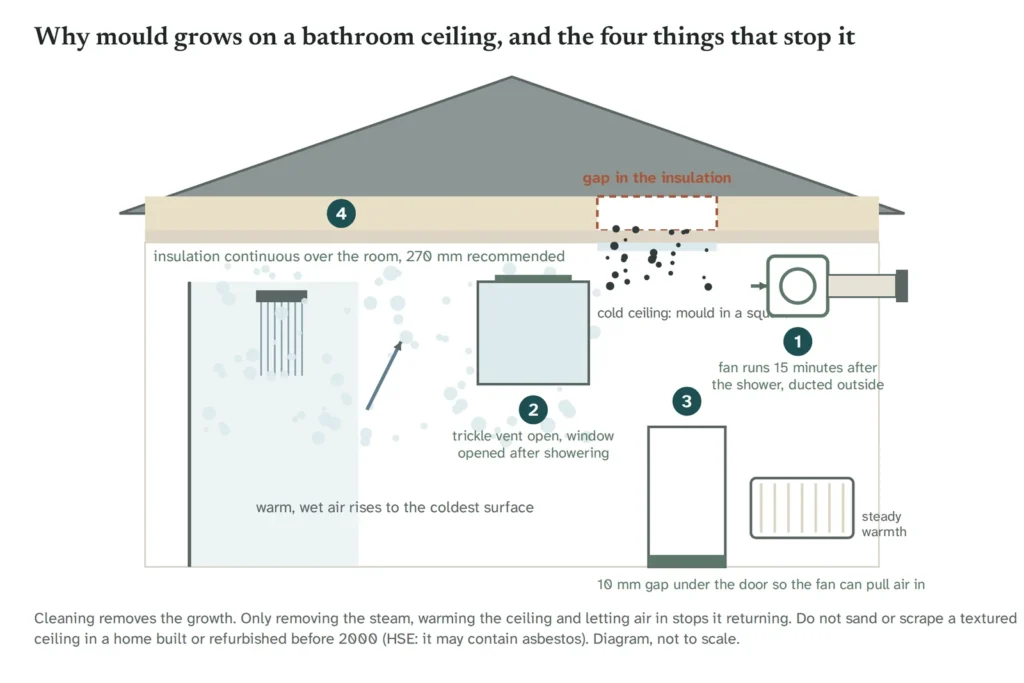
The most common single case. The ceiling is the coldest surface in the wettest room, so it condenses after every shower; the film soaks, lifts and peels in sheets, often with mould in the joints. Repainting alone lasts a few months. What lasts:
- An extractor fan that moves real air and runs on for at least 15 minutes (Energy Saving Trust), ducted outside, with a gap under the door so it can pull air in.
- Insulation above the ceiling continuous over the bathroom (GOV.UK points to a minimum of 270 mm of loft insulation as one of the most effective ways to keep a home warmer), so the ceiling is not the coldest thing in the room.
- Then the preparation above, a stain-blocker over any marks, and a bathroom paint.
When it is not a decorating job
- Blistering that comes back after rain: a roofer or builder for the outside defect.
- Plaster that is soft, crumbly, hollow when tapped or crusted with salts: the plaster has failed and needs a plasterer once the wall is dry, not more paint.
- Peeling low on a ground-floor wall with a tidemark: read rising damp signs before anyone quotes for injection; RICS notes that rising damp is often misdiagnosed and that a raised path or a leaking downpipe is the usual answer.
- Any textured coating in a pre-2000 home: asbestos survey first.
- A large area of lead paint: a professional decorator with lead-safe methods.
If you rent
If you rent, report it in writing with dated photographs and keep a copy. Under Awaab’s Law, from 27 October 2025 social landlords must investigate a potential hazard within 10 working days, make significant damp and mould hazards safe within 5 working days of identifying them, complete emergency safety works within 24 hours and offer alternative accommodation if they cannot. Private renters are due to be covered under the Renters’ Rights Act at a later date; meanwhile the council’s environmental health team can inspect a private rented home. Shelter and Citizens Advice cover the legal side; this site does not give legal advice.
Peeling paint on its own is decoration. Peeling paint caused by condensation on a cold, uninsulated ceiling or by water coming in is a repair, and the moisture cause is the landlord’s to fix.
Sources
- 15 paint problems and how to fix them, Dulux (manufacturer guidance)
- Lead: general information, UKHSA, updated 31 October 2024
- Asbestos, Health and Safety Executive
- Fixing damp and condensation, Energy Saving Trust, updated 22 May 2026
- Understanding and addressing the health risks of damp and mould in the home, GOV.UK (DLUHC and UKHSA), updated 1 April 2026
- Get rid of mould, Oxford City Council
- Damp and mould consumer guide, RICS, 16 June 2025
- Assessing damp in historic buildings, Historic England
- How Awaab’s Law changes the rules on hazards in social housing, Shelter, October 2025